


The short answer
Most high-end freezer problems, including warm temperatures, frost build-up, ice maker failures and noisy fans, can be repaired without replacing the unit. Our technician diagnoses the cause in your kitchen, explains the repair and what affects its cost, and gets your approval before any work begins.
A freezer that starts warming up puts a lot of food at risk quickly, so it helps to know what is wrong and what it will take to fix it. Wolf Appliance Services repairs built-in, column and professional-style freezers in San Jose and nearby cities. Many of the kitchens we work in are built around Wolf ranges and wall ovens, with Sub-Zero, Viking or Thermador refrigeration installed alongside. We are an independent repair company and are not affiliated with any appliance brand. Our focus is premium equipment, where panel-ready doors, tight cabinetry and sealed refrigeration systems call for careful work. This page covers the symptoms worth calling about, what our technician checks, how the brands differ, and how to think about repairing or replacing a high-end freezer.
Issues we fix
These are the freezer symptoms homeowners call us about most often. If you notice one, check that the door closes fully and that the vents inside aren't blocked by packages. If that doesn't help, it's time for a diagnosis.
- Freezer not cold enough, or food softening along the edges
- Frost or ice building up on the back wall, the shelves or around the door
- Ice maker not producing ice, making small or hollow cubes, or leaking
- Water pooling under the unit or ice forming on the floor of the freezer
- Error codes, flashing temperature displays or unresponsive controls
- Compressor running constantly, or cycling on and off more than usual
- Clicking, buzzing, grinding or rattling from fans or the compressor area
- Door that won't seal, sags under a heavy custom panel or won't stay closed
- Freezer working while the attached refrigerator section isn't, or the reverse
What our technician checks on a built-in or professional-style freezer
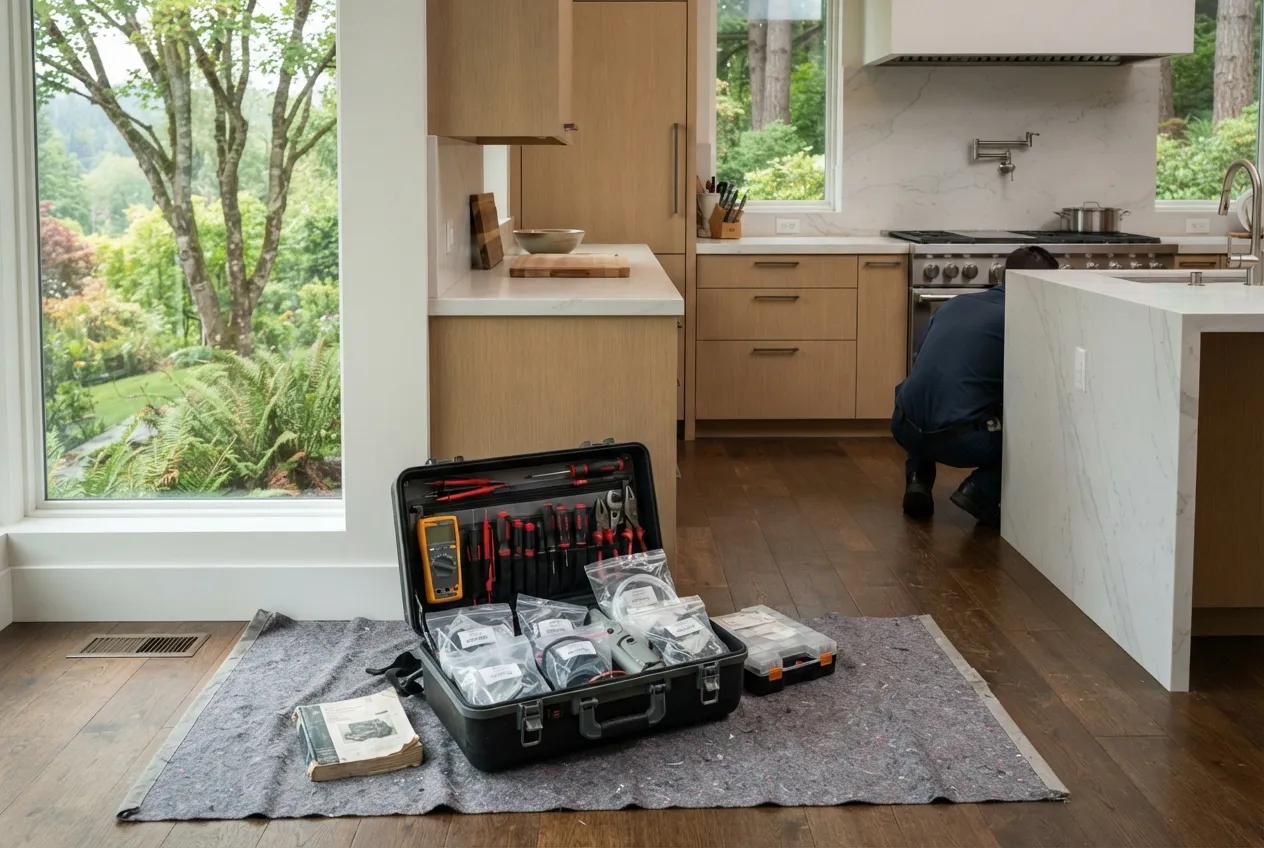
Built-in freezers pack their components into a small space, often behind a grille at the top or bottom of the unit. Our technician works through the system in order instead of guessing at parts. That usually means checking the condenser coils and condenser fan for dust and airflow, the evaporator fan, and the defrost system, which includes the heater, the sensors and the drain. We also test the temperature sensors and the control board, read any stored error codes, and inspect the door gaskets and hinges for leaks.
If those check out, we look at the sealed system: the compressor's operation and the signs of a refrigerant leak or restriction. We also look at the installation itself, because a built-in unit needs clear airflow at the grille. In the inland and southern parts of the Santa Clara Valley, hot, dry summers put extra load on a condenser that is dusty or boxed in, and that often shows up as a freezer that struggles in the afternoon.
How Sub-Zero, Viking, Wolf and Thermador freezers differ
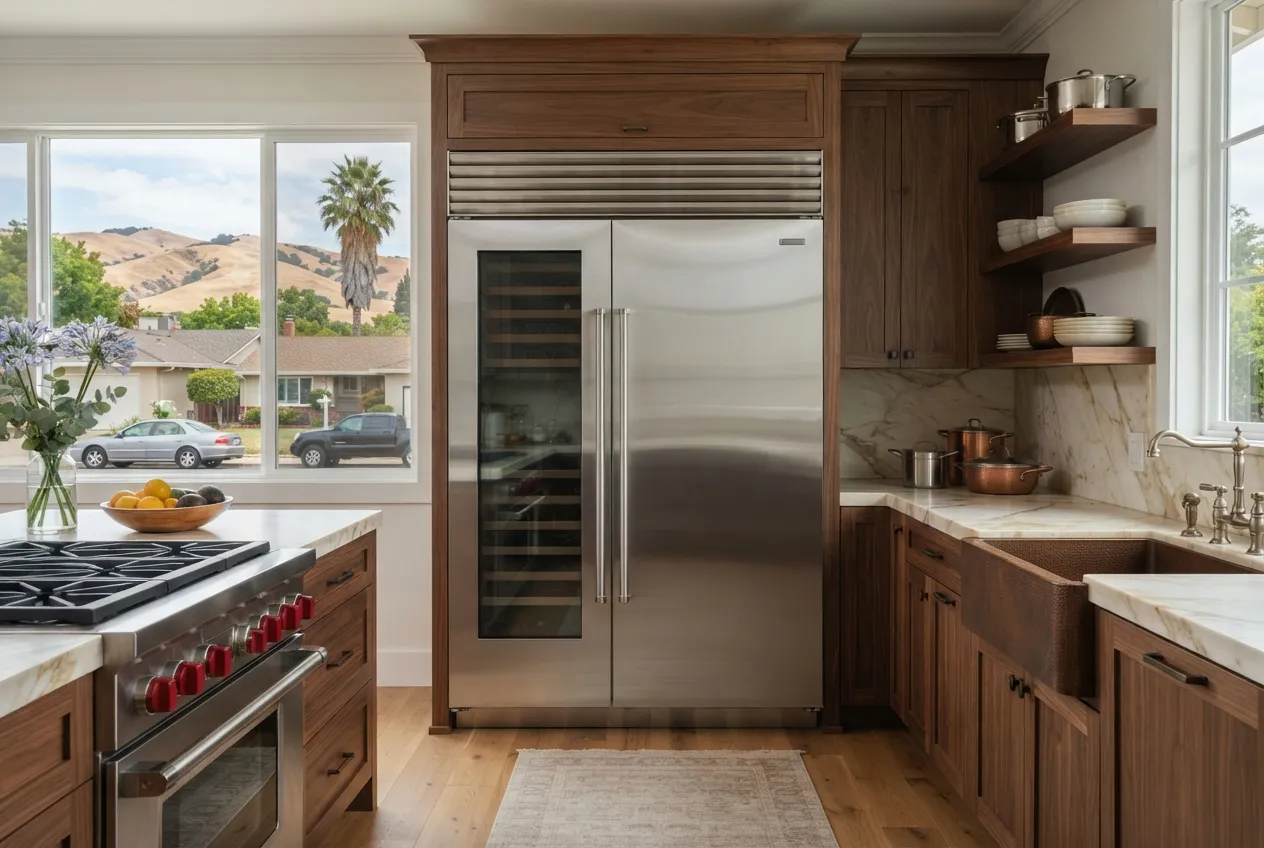
Wolf is best known for cooking appliances, and most Wolf kitchens pair those ranges and ovens with Sub-Zero refrigeration from the same parent company. So when a Wolf owner calls about a freezer, it is usually a Sub-Zero. Many Sub-Zero models use separate refrigeration for the freezer and the fresh-food side. That makes it important to work out which system is at fault. Condenser cleaning, evaporator fans, defrost parts, ice maker water valves and door hinges are common service points.
Viking built-in and column freezers commonly need attention to fan motors, ice makers, controls and door alignment, especially where a heavy custom panel has worn the hinges over time. Thermador column freezers are electronically controlled and installed in tight column cabinetry. Diagnosis often starts with the controls and sensors, and reaching the mechanical compartment takes care to protect the surrounding millwork.
Tell us what your appliance is doing.
Repair or replace a high-end freezer?
Premium built-in freezers are designed for long service lives, and replacing one is rarely a simple swap. A new unit has to match the cabinet opening, the panel style and often a matching refrigerator column. For that reason, repair is usually the sensible choice for fans, defrost components, ice makers, gaskets, hinges, sensors and control boards.
Replacement deserves a closer look when the sealed system has failed on an older unit, when the parts you need are no longer available, or when the cabinet and liner are damaged. In those cases, our technician will lay out the repair option honestly so you can weigh it against replacing the unit. We won't push either direction.
What affects the cost of freezer repair
We don't quote over the phone without seeing the unit, because the same symptom can have very different causes. The main factors are listed below. Before any work starts, you'll know what we found and what the repair involves.
- The fault itself, since a dirty condenser or failed fan is a smaller job than sealed-system work
- The parts required, and whether they are in stock or need to be ordered
- Access, including custom panels, tight cabinetry and units that must be slid out of their opening
- Whether more than one problem is present, such as a failed defrost heater that has also iced over a fan
How a freezer repair visit works
When you contact us, we'll ask for the brand, the model if you have it, and what you're noticing, so the technician arrives prepared. During the visit, they diagnose the freezer, explain the cause in plain terms and walk you through the repair before starting. Many repairs are finished on the first visit. If a part has to be ordered, we schedule a return trip and can suggest ways to protect your food in the meantime. We take care around your cabinetry and flooring, and we test the freezer before we leave.