


The short answer
Most outdoor grill problems come down to ignition, gas flow, or burner condition, and they can usually be repaired without pulling the grill out of the island. A technician tests the gas supply, igniters, valves, and burners to find the specific fault before recommending a repair or, occasionally, a replacement.
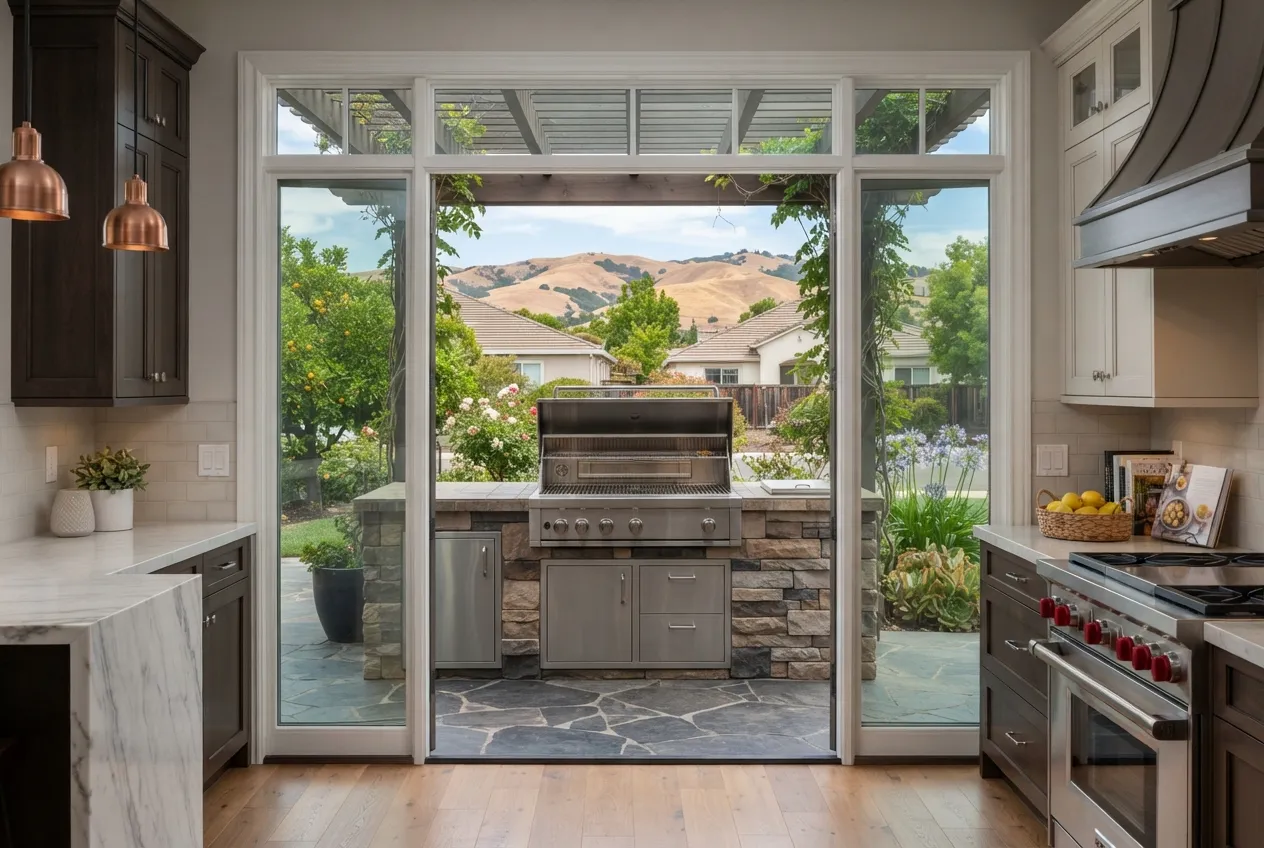
A built-in grill is usually the centerpiece of an outdoor kitchen, so when a burner won't light or one side runs cold, the whole space stops working the way it should. Wolf Appliance Services repairs built-in and professional-style outdoor grills for homeowners in San Jose and nearby cities. We focus on Wolf and Viking outdoor grills. We also service the Sub-Zero outdoor refrigeration and Thermador cooking appliances that often share the same project. We are an independent repair company, not affiliated with any manufacturer. We diagnose the actual fault, explain it in plain terms, and fix it in place whenever we can.
Issues we fix
These are the symptoms San Jose homeowners describe most often when they call about a built-in grill. Many have more than one possible cause, which is why we test before we replace parts.
- Burners that won't ignite, or an igniter that clicks without throwing a spark
- A burner that lights but goes out as soon as you release the knob
- Low, weak, or yellow and lazy flames instead of a steady blue flame
- Uneven heat, with hot and cold zones across the grates
- Infrared or sear burners that don't glow or heat unevenly
- Rotisserie motors or rear rotisserie burners that don't work
- Excessive flare-ups or grease fires from a clogged grease path
- Stiff, loose, or broken control knobs and valves
- Grill lights or electronic ignition that stopped working
- Rust, corrosion, or warped flame tamers and heat shields
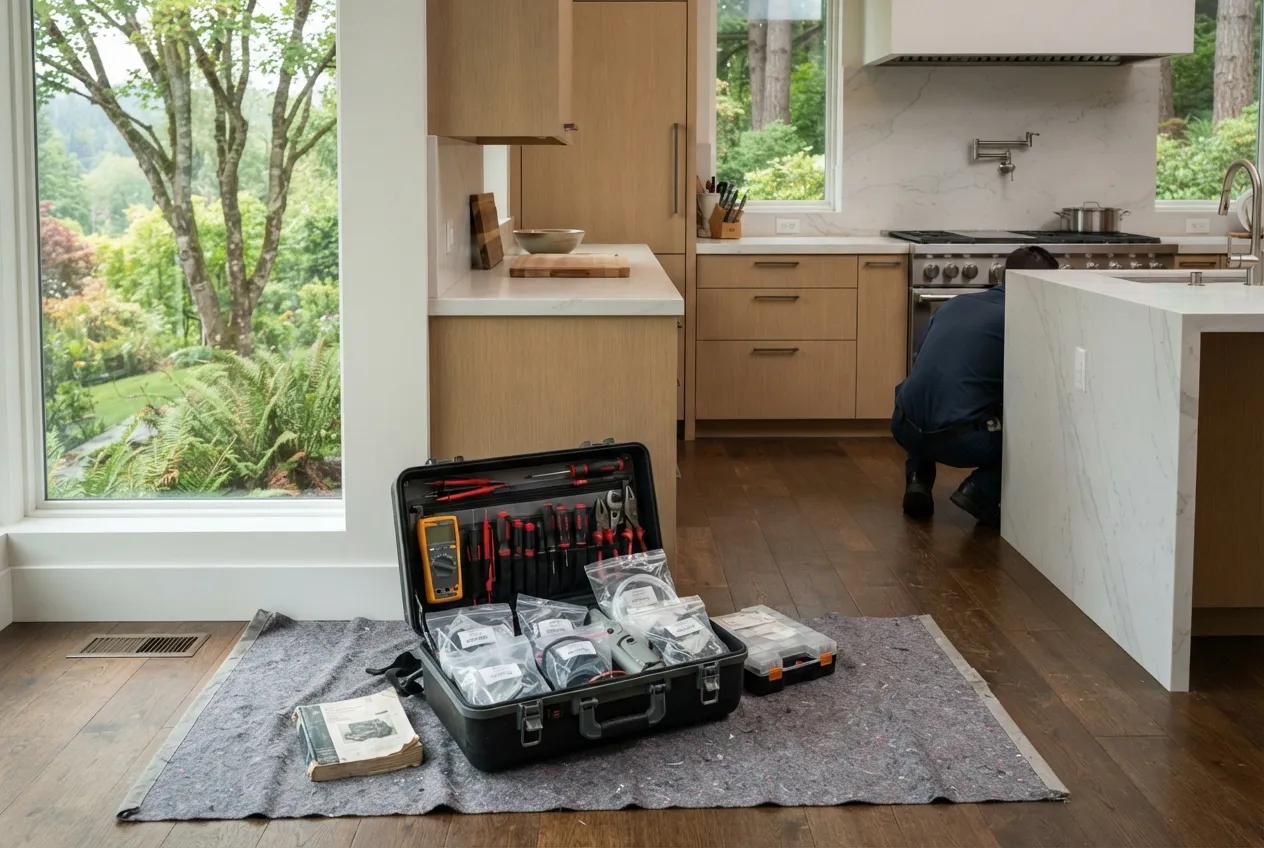
What our technician checks on a built-in grill
We start with the gas supply. That means confirming the shutoff is open, checking the regulator and inlet pressure, and making sure the grill is set up for the fuel it actually uses. A grill fitted with propane orifices but connected to natural gas, or the reverse, will burn poorly no matter what else is fixed.
Next we look at airflow and burners. Venturi tubes, the short passages that mix air with gas, are a common place for spiders and insects to build nests. A blocked venturi starves the burner and can push flame back toward the knobs. We inspect burner ports for clogging and corrosion and check that each burner sits correctly over its valve.
For ignition, we test the electrodes, spark gap, wiring, and the ignition module or its power source. On burners with a flame-safety feature, we test the thermocouple and valve so the burner stays lit only when it should. We also check grease trays and drip paths, flame tamers, infrared elements, rotisserie motors, lighting, and the ventilation openings in the island itself. A cabinet without enough venting can trap gas and heat, and that affects both safety and performance.
If you smell gas, turn off the supply at the shutoff valve, don't try to light the grill, and contact your gas utility before scheduling a repair.
How the brands differ in what tends to fail
Wolf outdoor grills are heavy, stainless, professional-style units. On a Wolf, the calls we see usually involve ignition components, burners that need cleaning or replacement after years of grease and weather, and infrared or rotisserie burners that see less use and get neglected. Viking outdoor grills follow a similar pattern. Ignition parts, valve stiffness, and corrosion on older units are the usual starting points. Because both are built to last, they are generally good candidates for part-level repair.
Many San Jose outdoor kitchens pair the grill with Sub-Zero outdoor refrigeration. Those units have their own concerns, such as cooling, door seals, and condenser airflow in a hot cabinet, and we can look at them during the same visit. Some homeowners also have a Thermador range or rangetop indoors and ask us to check it while we're there. We handle that as a separate diagnosis so each appliance gets a proper look.
Climate plays a part across every brand. The Santa Clara Valley has dry summers and mild, damp winters. Grills that sit unused and uncovered through the wet months often come back in spring with corroded igniters and insect-blocked venturis. Inland and southern parts of the valley run hotter in summer, which is hard on wiring and electronics in enclosed islands.
Tell us what your appliance is doing.
Repair or replace a high-end grill?
For most premium built-in grills, repair is the practical choice. The firebox, housing, and frame on these units rarely wear out. The parts that fail, such as igniters, burners, valves, thermocouples, and flame tamers, are designed to be replaced. Replacing the whole grill can also mean modifying the island cutout, the gas connection, or the countertop, which adds work beyond the appliance.
Replacement starts to make sense when the firebox or housing is badly rusted through, when key parts are no longer available for an older model, or when several major components have failed at once. We'll tell you plainly which situation you're in so you can decide with the full picture.
What affects the cost of a grill repair
The biggest factor is the fault itself. Cleaning and adjusting an igniter or clearing a venturi is a much smaller job than replacing a valve manifold or an infrared burner. The parts matter too. Some components for Wolf and Viking grills are readily available, while others for older or discontinued models take longer to source. Access is the third factor. A grill set into custom stone or masonry, with tight clearances or a gas line that's hard to reach, takes more time to work on safely. We explain the diagnosis and the parts involved before any repair begins.
How a service visit works
When you contact us, tell us the brand, the model number if you can find it, and what you're noticing. The model plate is often on the underside of the control panel or inside the grill cart or island door. We schedule a time for a technician to come to your home in San Jose or a nearby city.
At the visit, the technician confirms the symptoms, tests the gas supply and components, and explains what's wrong and what it will take to fix. If the part is on hand, many repairs are finished the same visit. If a part needs to be ordered, we schedule a return trip to complete the work and then test every burner before we leave.