


The short answer
Most microwave drawer problems come from a failed drawer motor or gear, a door switch, a control board, or a component in the high-voltage heating circuit, and these are usually repairable. A technician can diagnose the fault in your home and tell you whether a repair is worth it before any work begins.
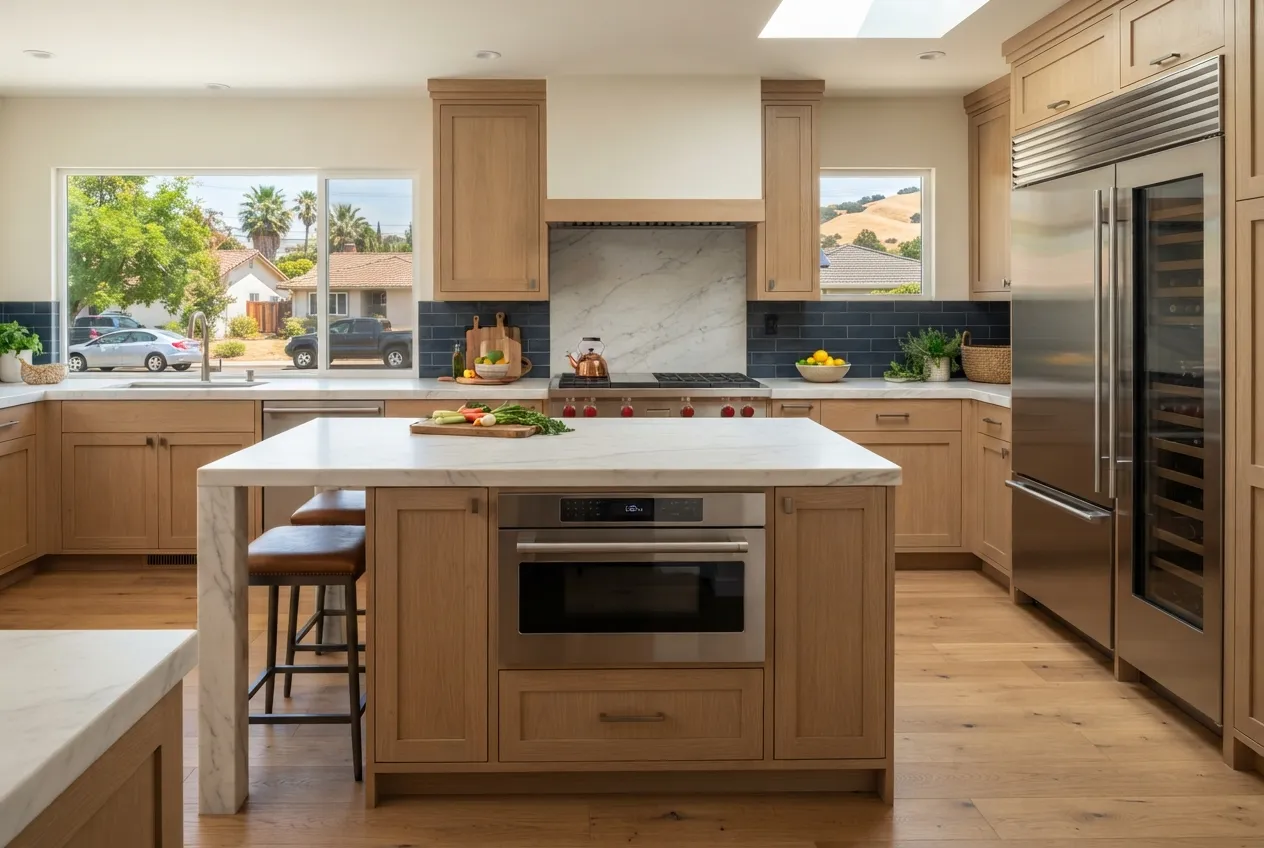
A microwave drawer is easy to forget about until it stops working. Then the drawer won't glide open, the display goes dark, or the unit hums for two minutes and leaves your food cold. Wolf Appliance Services repairs built-in microwave drawers in homes across San Jose and the surrounding South Bay cities. We work mainly on Wolf units and also service Viking and Thermador models, along with the Wolf drawers that often sit beneath a Sub-Zero refrigerator in the same kitchen. We are an independent repair company with no ties to any manufacturer. That means we tell you what we find and what makes sense to fix, then do the work in your kitchen with the unit kept in its cabinet whenever possible.
Issues we fix
Microwave drawers combine a standard microwave heating system with a motorized drawer mechanism and a touch or capacitive control panel. Problems can start in any of those three areas, and the symptom you notice doesn't always point straight to the cause. These are the complaints we hear most often:
- Drawer won't open or close, opens only partway, or stops and reverses on its own
- Grinding, clicking, or straining noise when the drawer moves
- Unit runs, fan and light come on, but food doesn't heat
- Heating is weak or uneven compared to how it used to cook
- Control panel unresponsive, some keys dead, or display blank
- Error codes or flashing messages on the display
- Sparking, arcing, or a burning smell inside the cavity
- Unit trips the breaker or blows a fuse when started
- Cooling fan keeps running long after cooking ends
- Interior light out or drawer seal damaged
What our technician checks on a built-in unit
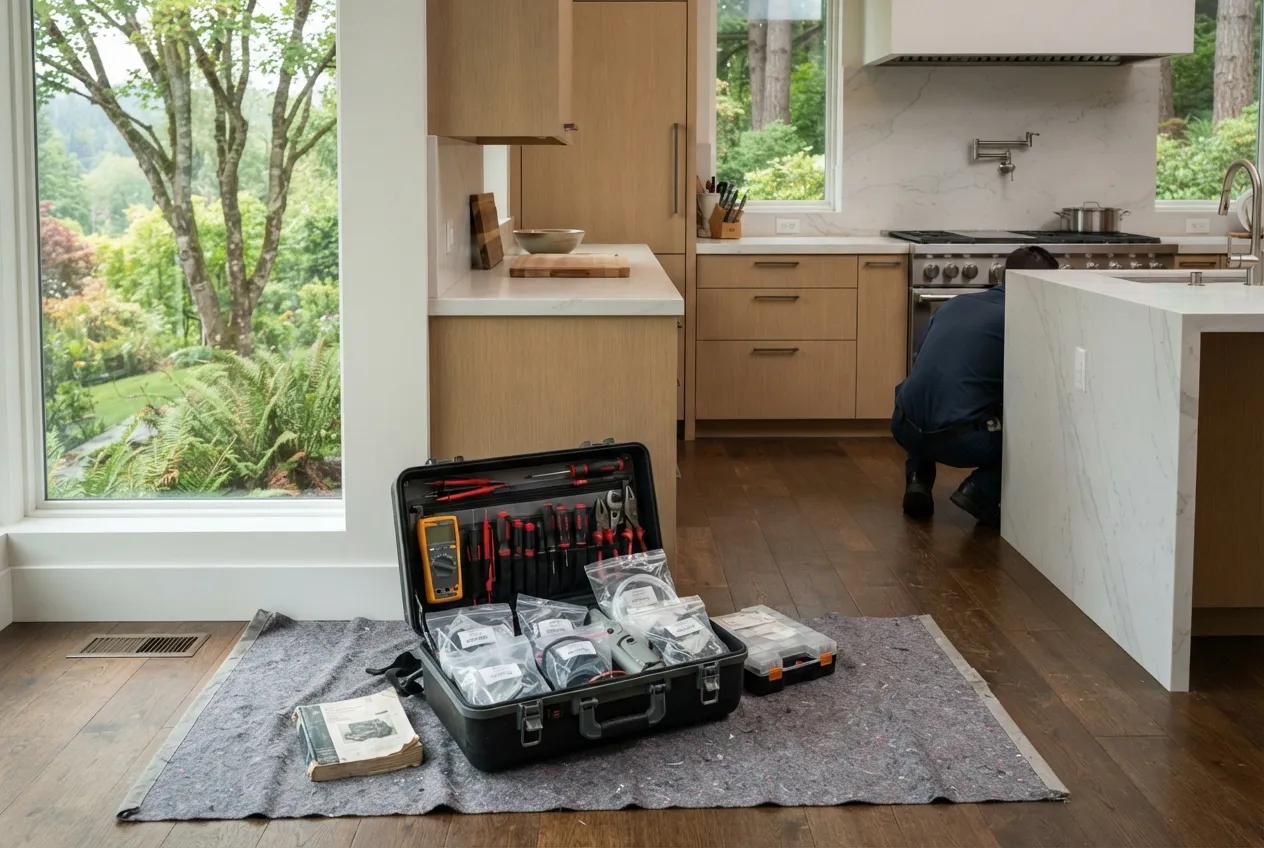
A built-in microwave drawer is installed flush in a base cabinet or under a cooktop, so the first step is confirming power and safely discharging the high-voltage system before any panel comes off. Microwaves store a dangerous charge in the capacitor even when unplugged. This is one of the main reasons we advise homeowners not to open the unit themselves.
From there, the technician works through the system that matches your symptom. For drawer movement, that means the drawer motor, drive gears and rack, slide rails, and the position switches that tell the control where the drawer is. For heating faults, it means the magnetron, high-voltage diode, capacitor, transformer, and the thermal cutouts that shut the unit down if it overheats. For control problems, we test the touch panel, its ribbon connections, and the main control board, and we check the door interlock switches. Those switches are a common cause of a unit that lights up but refuses to heat.
We also look at ventilation clearance around the cabinet. A drawer that can't move air properly runs hot, and repeated overheating wears out fans and electronics faster. That matters more in the hotter inland and southern parts of the valley during dry summers.
How Wolf, Sub-Zero, Viking and Thermador models differ
Wolf microwave drawers are the units we see most. Their drawer mechanism and door switches are the most frequent wear points, along with control panel issues on units that get heavy daily use. Sub-Zero focuses on refrigeration and doesn't build its own microwave drawers. Many Sub-Zero kitchens pair the refrigerator with a Wolf drawer, though, and we often service both appliances on the same visit.
Viking and Thermador drawers work on the same basic principles, but their drive assemblies, control layouts, and trim are specific to each brand and generation. Thermador drawers often see complaints about the drawer motor and the touch controls. On Viking units, we commonly trace problems to the drawer drive and to the heating components. Across all of them, parts are model-specific. Getting the exact model and serial number off the rating label is the first thing we do.
Tell us what your appliance is doing.
Repair or replace a high-end microwave drawer
Replacing a premium microwave drawer is rarely a simple swap. Cutout dimensions, trim kits, and finishes vary between brands and model years. A new unit may not fit the opening, or it may not match the surrounding panels and the other appliances in your kitchen. For that reason, repair is usually the better choice when the cabinet, cavity, and drawer structure are in good shape.
Replacement starts to make sense in a few situations. One is when the magnetron and control board have both failed. Another is when the interior cavity is rusted or damaged. A third is when key parts are no longer produced for your model. We'll tell you plainly if we think a repair won't hold up, so you can make the call with real information.
What affects the cost of a repair
We don't quote a figure before we've seen the unit, because three things drive the cost and each varies widely. The first is the fault itself. A door switch or slide adjustment is a much smaller job than a failed magnetron or control board. The second is the part. Some components are stocked and easy to source, while others are model-specific and take longer to arrive. The third is access. Units set into custom cabinetry, under stone countertops, or below a cooktop sometimes have to be partially or fully pulled out, and that takes careful handling to avoid damaging panels and trim.
After diagnosis, we explain what failed and what the repair involves. You decide whether to go ahead before any repair work starts.
How a visit works
When you contact us, we'll ask for the brand, model if you have it, and a short description of what the drawer is doing. That helps the technician arrive prepared. On the visit, they confirm the symptom, discharge and test the unit, and pinpoint the failed component. If the part is on hand, many repairs are finished the same day. If it has to be ordered, we schedule a return visit to install it and test the drawer through full open, close, and heating cycles.
Before the visit, clear the counter area above the drawer if possible and keep the breaker for the unit easy to reach. Don't keep running a drawer that sparks, smells burnt, or trips the breaker. Switch it off at the breaker and wait for us.